In one of the most remote places on Earth, scientists have made a groundbreaking discovery—a 228-meter-long sediment core extracted from beneath the West Antarctic Ice Sheet.This remarkable achievement offers powerful clues about Earth’s past climate and future sea levels.
What may seem like a simple column of mud and rock is actually a detailed record of millions of yearsof environmental change. By studying it, scientists hope to better understand how Antarctica reactsto warming temperatures—and what that means for the rest of the world.

Where and How the Core Was Extracted
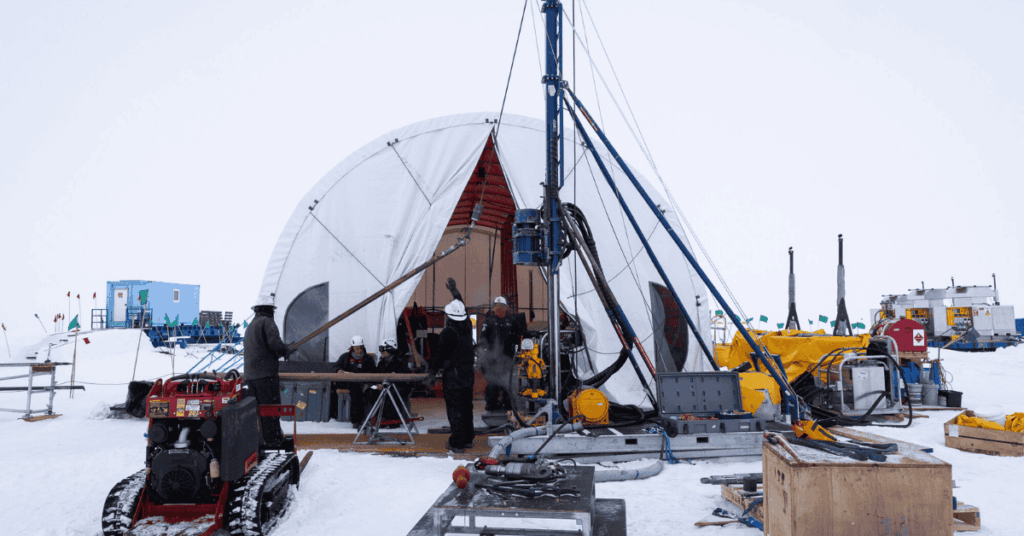
The drilling took place at Crary Ice Rise, buried beneath over 500 meters of iceand located hundreds of kilometers from the nearest research base.
Scientists used a hot-water drilling system to melt a shaft through the ice,followed by a specialized drill to extract sediment sections.
These sections were assembled into a continuous 228-meter core—believed to containenvironmental records dating back around 23 million years.
Why This Discovery Matters
Sediment cores act like natural timelines, with each layer preserving clues aboutEarth’s climate at different points in history.
This core is especially important because it comes from beneath the West Antarctic Ice Sheet,which plays a major role in global sea levels.If this ice sheet were to melt completely, global sea levels could rise by up to 5 meters.
Evidence of a Warmer Antarctica
One of the most surprising discoveries is evidence that parts of Antarctica were once ice-free.
- Coarse rock layers suggest glacier-covered periods
- Fine mud and marine fossils indicate open ocean conditions
- Sunlight-dependent organisms suggest ice-free environments
This challenges long-held beliefs that the region has always been permanently frozen.
What Scientists Are Hoping to Learn
By studying this core, scientists aim to understand how ice sheets respond to climate change.This will help improve climate models and predict how quickly ice loss could occur in the future.

Why This Matters for the World
Rising sea levels impact millions of people around the globe.
Better predictions can help:
- Improve flood protection systems
- Protect coastal ecosystems
- Prepare for climate migration
Filling a Critical Scientific Gap
Most previous research focused on coastal regions of Antarctica.This new core provides rare data from deep beneath the ice sheet,
offering a more complete understanding of long-term climate behavior.
The Work Is Just Beginning
Scientists from multiple countries are now analyzing the core in detail.
They will study:
- Layer age and timeline
- Chemical and biological markers
- Past temperature and ocean conditions
This research will take years but could reshape climate science.
Conclusion
This Antarctic discovery is more than just a scientific milestone—it is a window into Earth’s pastand a warning about its future.
By understanding how ice sheets behaved millions of years ago, scientists can better predictwhat lies ahead in a warming world.
What looks like a simple core of mud and rock may actually hold the answersto one of the biggest challenges humanity faces today.