
People in Ontario who rely on provincial tax credits to get by should get ready for the next Ontario Trillium Benefit payment, which is due on Friday, April 10, 2026.
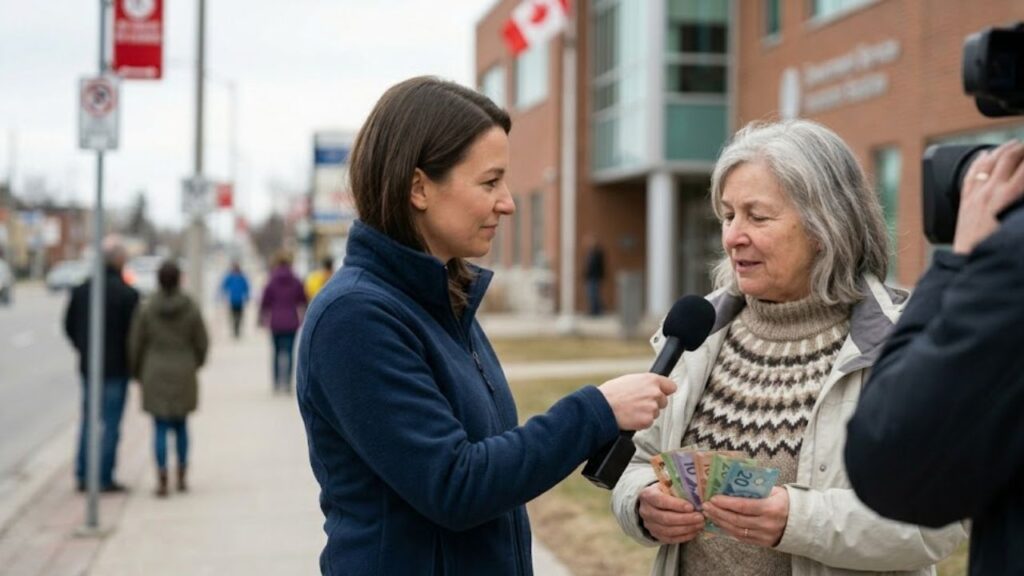
The Ontario government will pay this tax-free monthly payment to the bank accounts of hundreds of thousands of eligible Ontario households.
The Ontario Trillium Benefit is still one of the best provincial benefitprograms in Canada. It helps low- and moderate-income families pay for basic needs like rising energy costs, property taxes, and everyday expenses.
April 2026 is a very important time for people in Ontario who get benefits. The tax filing deadline is coming up, and the new benefit year starts in July 2026. Because of inflation indexation, payments will be higher.
This complete guide has all the information you need about the April 10 OTB payment, such as the exact maximum amounts, the requirements for eligibility, the income thresholds, the increases that will happen in July 2026, and how to make sure you get every dollar you are owed.
What is the Ontario Trillium Benefit?
The Ontario Trillium Benefit is a tax-free payment that combines three different provincial credits into one monthly payment system. It is meant to help people in Ontario pay for basic living costs.
The Province of Ontario makes the laws and pays for the OTB, but the Canada Revenue Agency runs it for the provincial government.
When you get your OTB deposit, it will show up in your bank account as Canada Pro Deposit instead of as a separate payment from the Ontario government.
The benefit combines three provincial tax credits into one easy-to-manage monthly payment.
Credit Component: Purpose
- The Ontario Sales Tax Credit (OSTC) helps people pay less of the Harmonised Sales Tax on things they buy every day.
- The Ontario Energy and Property Tax Credit (OEPTC) helps Ontario residents pay for their property taxes, rent, and energy bills.
- The Northern Ontario Energy Credit (NOEC) helps people in Northern Ontario who have to pay more for energy.
Sign up for Immigration News Canada!
Get free updates on the latest posts and more from Immigration News Canada sent straight to your email.
As our Privacy Notice says, we use your personal information for interest-based advertising purposes.
You only need to meet the requirements for one of these three credits to get the Ontario Trillium Benefit.
A lot of people in Ontario can get more than one component, which makes their total annual benefit amount go up a lot.
The OEPTC and OSTC parts alone could give a family of four living in Southern Ontario up to $2,823 a year.
When the NOEC is added to the combined payment, families in Northern Ontario could get up to $3,295 a year.
Maximum Payments for the Ontario Trillium Benefit in 2026
The benefit year that is currently going on runs from July 2026 to June 2026 and is based on your 2024 tax return.
During this payment period, these are the exact maximum amounts for each part of the Ontario Trillium Benefit.
Maximum Amounts for the Ontario Sales Tax Credit
Maximum Annual Amount for Each Recipient Category
- $371 for each adult in the house
- $371 for each child under 19 in the house
- $1,484 for a family of four (two adults and two kids)
Maximum amounts for the Ontario Energy and Property Tax Credit
Maximum Annual Amount for Each Recipient Category
- $1,283 for people aged 18 to 64 who are not seniors
- $1,461 for seniors 65 and older
- Long-term care or residents of reserves: an extra $285
- Extra $25 for a designated student residence
Maximum amounts for the Northern Ontario Energy Credit
Maximum Amount per Year for Each Type of Recipient
- $185 for single people
- $285 for families and single parents
Only people who lived in Northern Ontario on December 31, 2024, and paid rent, property tax, or home energy costs during the year can get the Northern Ontario Energy Credit.
Algoma, Cochrane, Kenora, Manitoulin, Nipissing, Parry Sound, Rainy River, Sudbury, Thunder Bay, and Timiskaming are all part of Northern Ontario regions.
Starting in July 2026, the Ontario Trillium Benefit amounts will go up.
The Ontario Consumer Price Index is used to change the Ontario Trillium Benefit each year to keep up with inflation rate changes.
Because the 2 percent indexation rate for 2026 has been confirmed, people in Ontario can expect to get more money starting with the payment on July 10, 2026.
These new amounts will be used for the benefit year from July 2026 to June 2027 and will be based on your 2026 tax return.
| Credit Component | Current Amount | Amount in July 2026 |
|---|---|---|
| OSTC per person | $371 | $378 |
| OEPTC non-seniors | $1,283 | $1,307 |
| OEPTC seniors 65 and older | $1,461 | $1,488 |
| NOEC singles | $185 | $189 |
| Families with NOECs | $285 | $290 |
The Ontario government has also suggested a big change to the Ontario Trillium Benefit in the 2026 Ontario Budget, which is called A Plan to Protect Ontario.
Beginning with the benefit year from July 2026 to June 2027, the limit for lump sum payments will rise from $360 to $500.
This means that people who are entitled to $500 or less in OTB each year will get their full benefit in one payment in July instead of monthly payments.
People who are eligible for more than $500 will keep getting monthly payments throughout the benefit year, unless they choose the option to get one payment later.
Income Limits and Rates of Reduction for the Ontario Trillium Benefit
The Ontario Trillium Benefit is based on income, which means that the amount you get goes down as your adjusted family net income goes up over certain levels.
To figure out how much you can expect to get, you need to know these income limit thresholds.
Ontario Sales Tax Credit Income Limits
Family Status Reduction Threshold
- $29,047 for single people without kids
- $36,309 for single parents
- $36,309 for married or common-law couples
Your adjusted net income above these limits will cause the Ontario Sales Tax Credit to go down by 4% reduction rate.
For instance, a single person making $35,000 would have their OSTC cut by 4% of the amount over $29,047, which comes out to about $238 total reduction.
Income Limits for the Ontario Energy and Property Tax Credit
The CRA uses a worksheet to figure out how much you can get based on your rent, property taxes, and adjusted net income. There is no one income cutoff point.
In general, the OEPTC starts to go down when your adjusted family net income is more than $25,000 for non-seniors and $50,000 for senior household income.
The rate of reduction is usually 2% of income over the threshold.
Income Limits for the Northern Ontario Energy Credit
Family Status: The point at which the reduction starts
- People who are single: $50,833
- $65,356 for families
The Northern Ontario Energy Credit has higher income limits because energy costs take up a bigger part of household budgets in northern communities.
The NOEC ends at the same time as the OEPTC, which is usually 2% of income over the limit.
Requirements to Get the Ontario Trillium Benefit
You must meet some basic requirements and be eligible for at least one of the three credit components in order to get the Ontario Trillium Benefit.
Based on your tax return and your completed Form ON BEN, the CRA looks at each credit separately to see if you qualify for benefits.
General Requirements for Eligibility
- For the current benefit year, which runs from July 2026 to June 2026, you had to have lived in Ontario on December 31, 2024.
- You have to meet at least one of the following requirements before June 1, 2026.
- You are at least 18 years old.
- You have a spouse or partner in common law.
- You are the child’s parent and live with them.
- You can’t have been in jail or a similar place for more than 90 days in the last year.
Dates for Ontario Trillium Benefit Payments in 2026
The OTB is sent out every month on the 10th during the benefit year.
If the 10th is a Saturday or Sunday, the payment is sent out on the last working day before the scheduled payment date.
The payment on April 10, 2026, is due on a Friday, and it will be deposited on that day as planned.
Dates for OTB Payments in 2026
- April 10, 2026, Friday
- May 8, 2026, Friday
- June 10, 2026, Wednesday
- Friday, July 10, 2026
- Monday, August 10, 2026
- September 10, 2026, Thursday
- Friday, October 9, 2026
- Tuesday, November 10, 2026
- December 10, 2026, Thursday
The payment on July 10, 2026, starts the new benefit year, and the amounts will be higher based on your 2026 tax return.
If your total OTB entitlement for the current benefit year is $360 or less, you will get your full benefit in July as a single lump sum payment instead of monthly payments.
Starting with the benefit year that begins in July 2026, this limit goes up to $500 total threshold.
How to Get the Ontario Trillium Benefit
It’s easy to apply for the Ontario Trillium Benefit, but there are some important steps you need to take to make sure you get all the credits you’re entitled to.
Step 1: Send in your tax return
You have to file a tax return every year, even if you don’t have any income to report.
The CRA uses the information on your return to figure out if you qualify and how much your benefit amount will be.
You have until April 30, 2026, to file your 2026 tax return for the benefit year 2026–2027, which runs from July 2026 to June 2027.
If you or your spouse work for themselves, you have until June 15, 2026, to file your taxes. However, you still have until April 30 to pay any taxes you owe.
Step 2: Fill out Form ON BEN
The OSTC is automatically calculated from your tax return, but you need to fill out Form ON BEN to apply for the OEPTC and NOEC parts.
Form ON BEN is the application for the Ontario Trillium Benefit and the Ontario Senior Homeowners Property Tax Grant.
This form is part of the Ontario tax package, and most tax software will help you fill it out as part of your return.
The form wants to know how much you paid in rent, property taxes, lodging, and energy costs over the course of the year.
Be ready with either the name of your landlord and the total rent you paid for the year, or the amount of property tax you owe if you own your home.
Step 3: Set Up Direct Deposit
The safest and fastest way to get your OTB payments is by direct deposit method.
Your OTB payments will go to the same account as your income tax refund if you already get your refund by direct deposit.
You can set up or change your direct deposit online through CRA My Account or by calling the CRA benefits line at 1 800 387 1193.
Step 4: Make sure your information is up to date
Your OTB calculation will change if your marital status, address, or number of dependents changes.
If your situation changes, you can update your information with the CRA through My Account or by calling the benefits line.
If you don’t report changes, you may end up paying too much and having to pay it back later.
How to Find Out the Status of Your Ontario Trillium Benefit Payment
You can check your payment status and the amounts of your upcoming deposits at any time by logging into CRA My Account.
Go to Benefits and Credits, then click on Ontario Trillium Benefit to see the details of your payment.
Your Notice of Assessment or Notice of Determination will also tell you how much OTB you will get for the whole year.
If you think there is a problem with your payment, wait for your notice first. Then, you can call the CRA benefits line at 1-877-627-6645 or the Province of Ontario directly at 1-866-ONT-TAXS (1-866-668-8297).
The CRA says that if your payment doesn’t come on the date you expect it to, you should wait 10 business days before calling them to find out what’s going on.
Reasons Why OTB Payments May Be Late or Less Than Expected
- You or your spouse didn’t file your taxes last year.
- When you filed your taxes, you didn’t fill out Form ON BEN.
- Your income went up from last year.
- Your marital status changed, and your family’s total income is now higher.
- During the benefit year, you moved out of Ontario.
- The CRA took money out of your payment because you owe them money.
- We recalculated your eligibility based on new information.
- The CRA hasn’t looked at your tax return yet.
Important Dates for People Who Get the Ontario Trillium Benefit
Due Date: What You Need to Do
- To get OTB payments starting in July 2026, you must file your 2026 tax return by April 30, 2026.
- June 15, 2026: The deadline for self-employed people to file their taxes has been moved back.
- June 19, 2026: Payments for returns that are reviewed by this date begin on July 10, 2026.
- July 10, 2026: The first payment of the new benefit year, with higher amounts
This year, it’s especially important to file your 2026 tax return by the April 30, 2026 deadline because it will decide if you qualify for the higher payment amounts in July 2026.
You will still get the benefit if you file late, but your payments may be delayed by four to eight weeks after your return is processed.
The Ontario Trillium Benefit payment on April 10, 2026, comes at a very important time because Ontario families are still dealing with high living costs and the tax filing deadline is coming up.
The OTB has three credit components that work together to help you deal with rising costs, no matter if you rent, own a home, are a student, are a senior, or live in Northern Ontario.
If you fill out Form ON BEN correctly and file your 2026 tax return by April 30, 2026, you will get every dollar you deserve when the payments go up in July 2026.
If you check your CRA information and set up direct deposit now, you can be sure that you will get your payments on time and without any problems throughout the benefit year.
Fact Checked: As of April 2026, all of the information in this article has been checked against official sources from the Government of Ontario and the Canada Revenue Agency.
This article is for informational purposes only and does not give financial or tax advice. Everyone’s situation is different, so you should talk to a qualified tax professional or the CRA directly for advice that is specific to you.
