Employees today know that leaders who are kind and caring can really change the workplace. Leaders who show empathy not only build trust, but they also give their teams the tools they need to succeed. When leaders really care about their employees, they can motivate them to do their best. This turns everyday interactions into important leadership moments that can help people grow in their careers and make the workplace more successful overall.
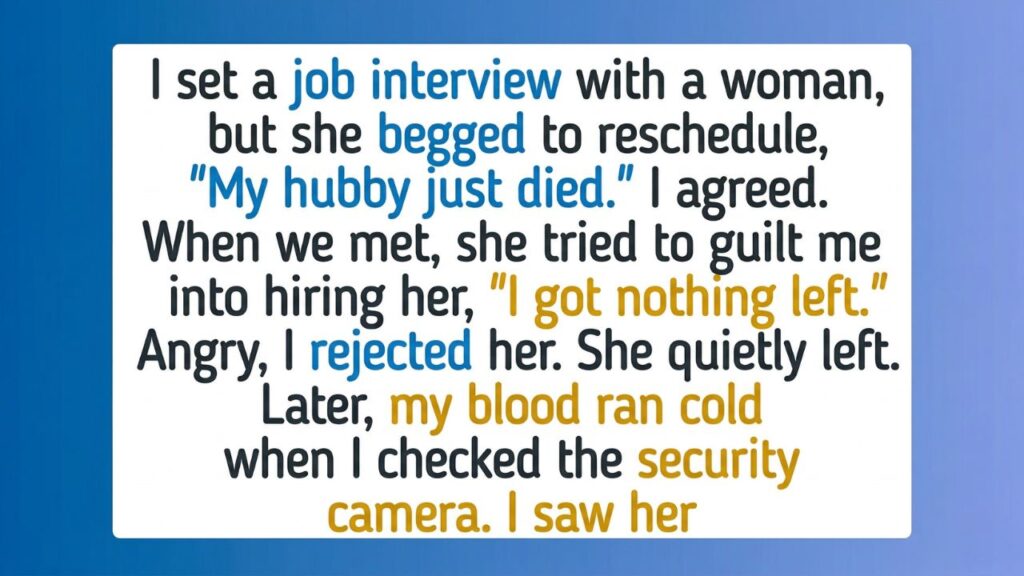
1. I set up a job interview with a woman, but she begged me to change it because “My husband just died.” I agreed. When we finally met, she tried to make me feel bad for not hiring her by saying, “I have nothing left.” I said no because I was angry. She walked away without making a sound.
When I looked at the security camera later, I felt a chill run down my spine. I saw her in the lobby getting her three kids. The oldest child looked about nine, which is the same age as my son.
I felt a wave of guilt wash over me. She had just lost her husband and was trying to keep everything together for her kids, so she didn’t have time to cry. I realised she was more than qualified when I looked at her CV again.
I called her back right away. I realised that she was the best candidate in the whole process.
2. I had already been working with her for ten years. I completely froze in the middle of a presentation for a client. I thought my boss would yell at me in front of everyone. Instead, she pulled me aside after the event, asked what went wrong, and showed me how to stay calm. She even said she would help me present next time if I needed it. I expected to be judged, but I got help instead.

3. I spilt coffee on my keyboard one night when I was working late to finish a report. I texted my boss, getting ready for an angry response the next day. Instead, he brought a spare keyboard and some cleaning wipes and joked, “It happens to the best of us.”
He even offered to help me move my desk around so that I wouldn’t have any more problems. I was embarrassed but grateful because I realised that mistakes don’t have to make you feel bad when someone chooses to help instead of blame.
4. I had just opened a new branch of my business, and we needed everyone to be on board. One of my workers told me he was going to take a two-week vacation. I said, “No.” The most daring betrayal I’ve ever seen. He smiled and said, “Got it, boss!” but he didn’t come.
I was angry and asked his closest teammate if he knew anything. Marcus shrugged and said he had a “family emergency.” I made the choice to call. He broke down when I asked what was going on. His son had just had open-heart surgery.
I felt guilty. I really meant it when I said I was sorry and told him that work should be the last thing on his mind.
5. I once scheduled two meetings at the same time and didn’t realise it until both clients showed up. I was scared because I thought my boss would be angry. Instead, she calmly laughed and said, “We’ll just split you between the rooms.” This helped me move everything around without anyone noticing.
I was shocked by how she reacted—she didn’t scold me; she just gave me advice. That moment taught me more than any class ever could.
6. I sent a snarky reply to a coworker in another case because I was mad and forgot that my boss was in the thread. I got ready to be embarrassed. Instead, she calmly suggested a better way to say it and then checked in with me later to see how I was doing.
She didn’t make me feel bad; she helped me. That’s when I learned that being a leader can be both kind and effective.
7. When I saw my boss’s email, I was scared because I had missed sending in a monthly report on time. I thought he would criticise me, but instead he asked if I needed help catching up and offered to meet with me one-on-one to help me work better.
That experience taught me that being a leader isn’t about punishing mistakes; it’s about helping people learn from them.
8. I thought I would be judged because I was late to a meeting because of a personal crisis. My boss just smiled, asked if I was okay, and said he would fill me in on what I missed.
There was no blame or lecture, just understanding. That support made me want to work even harder to gain her trust.
9. I knew I would be angry when I accidentally broke an office printer while trying to fix a jam. My boss came over instead, looked at the situation, and laughed, “Don’t worry, it happens.” This will fix it quickly.
That moment stayed with me: calm problem-solving took the place of what could have been unnecessary stress.
10. I once sent a client a draft that wasn’t finished instead of the final version. I felt my heart race as I thought about getting angry. Instead, my boss was nice and asked me to send the polished version when it was ready. Later, he helped me improve my workflow.
It taught me that being patient is often a better way to lead than being scared.
11. The client started asking a lot of questions quickly right when my slides froze during my first big presentation. My boss quietly stepped in, took over the laptop, and led the conversation while I watched.
In the end, the client praised how well we were prepared, and I learned more in that moment than I ever could have in a training session.
12. Employees feel valued, supported, and motivated to do their best when their leaders choose kindness and compassion. This kind of leadership makes the workplace a good place to work, where everyone can succeed and grow together.