The Tax-Free Savings Account (TFSA) is one of the best ways for Canadians to save for retirement. Cash, guaranteed investment certificates (GICs), bonds, mutual funds, and stocks are all types of investments that can be held in a TFSA. These investments grow tax-free. Even better, you can take out any interest dividends capital gains you make without having to pay taxes.
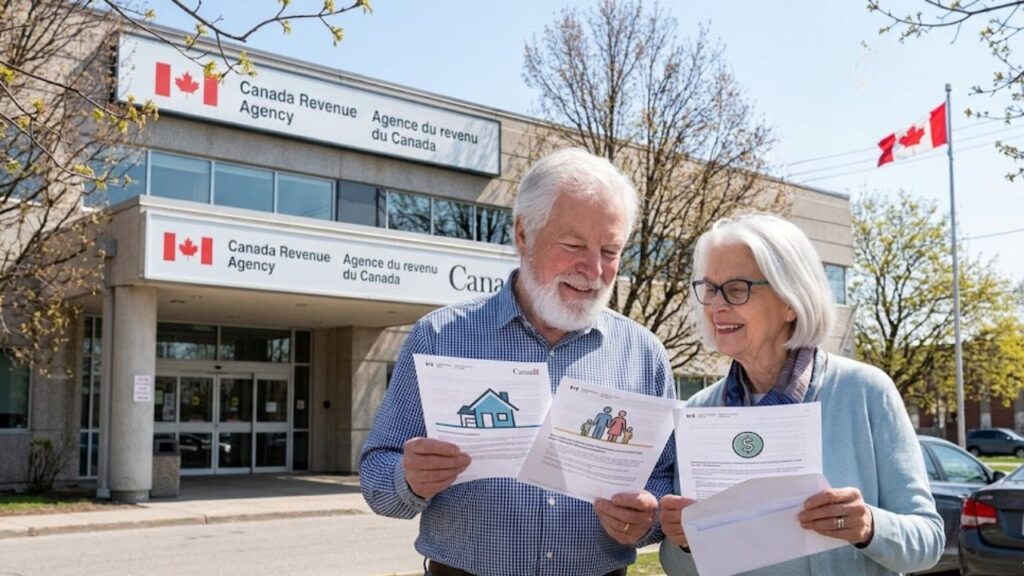
But the most important question is still: how much money do you need in your TFSA to retire comfortably?
A realistic goal for your TFSA retirement
The TFSA won’t be the only way for most Canadians to make money in retirement. There are many ways to save for retirement, including the Canada Pension Plan (CPP), Old Age Security (OAS), workplace pensions, and Registered Retirement Savings Plans (RRSPs), which can later be turned into Registered Retirement Income Funds (RRIFs). The TFSA is different from other accounts because you can take money out of it without paying taxes and it doesn’t affect benefits based on income, like OAS.

The most you can put into a TFSA by 2026 is $109,000. If a Canadian put the maximum amount into their TFSA every year since it started in 2009 and invested it in a growth-oriented portfolio that earned 7–10% a year, that amount would have grown to between $199,700 and $264,516 by now.
This is a helpful point of reference. A TFSA worth between $199,700 and $264,516 can give you a good amount of tax-free income in retirement. A $232,108 TFSA (the middle of $199,700 and $264,516) could give you about $9,284 a year without paying any taxes if you follow the conservative 4% withdrawal rule.
That may not cover all of your costs, but it can help you avoid moving into higher tax brackets or having your OAS benefits taken away by lowering the amount of money you have to pay taxes on.
Why most Canadians are behind and what they should do
Even though it has benefits, a lot of Canadians aren’t using their TFSA enough. The most recent data from Statistics Canada shows that the average TFSA balance is still quite low. Many people, even those who are older, have less than $70,000.
This gap shows an important truth: the TFSA’s strength comes from being consistent, not from timing. It’s much more important to make regular contributions invest long term and be disciplined than to try to pick winning stocks or time the market.
If you’re behind, the answer is simple:
- Give as much as you can each year.
- Put all of your profits and income back into your business.
- Keep your money in market even when it goes up and down.
Making the most of your TFSA every year should be a top priority in retirement plan.
Making a strong TFSA portfolio
A well-organized TFSA that has decades until retirement should focus on long-term growth with diversification while keeping a variety of investments. Putting all of your money into one high-risk investment can make it less tax-free.
There Will Be Up to $109,000 in TFSA Space in 2026!
Did you know that in 2026, you could put up to $109,000 into a tax-free savings account (TFSA)?
The Federal Government agreed to let Canadians put an extra $7,000 into their TFSA last year. This year, every Canadian over the age of 18 gets that much room. People over 18 also have room to grow. If you were 18 in 2009 and hadn’t put any money into a TFSA before this year, the most you could have is $109,000.
$109,000 is a lot of money. If you put $109,000 into an investment that pays 10% a year for 30 years, you will have $1.9 million at the end. That’s enough money to retire on right now. You might want to add a million or two to account for inflation.

So, the TFSA is quickly becoming a powerful tool for wealth building. In the next few paragraphs, I’ll show you how to use your TFSA contribution room (up to $109,000) to save almost $2 million for retirement.
How to reach $1.9 million in a TFSA
In 30 years, a TFSA that is full to the brim with $109,000 could easily be worth $1.9 million. That might sound like a great result, but it’s not that hard to figure out.
Let’s say that stocks return about 10% a year on average. If that keeps happening, investors who start today and put their money into passive index funds should be able to make 10% a year for the next 30 years.
Next, let’s see how much an investment that grows by 10% a year grows over 30 years. This is equal to 1.1 raised to the 30th power, which is 17.4.
Finally, we multiply that by 109,000 to get our final amount, which is $1.9 million.
If we were putting money into taxable accounts, we would have to pay taxes on some of the gains each year. But you can trust the math above because TFSAs are completely tax-free as long as you follow the rules for the account. It doesn’t take much for $109,000 to turn into $1.9 million in a TFSA.
What to put your money into
We can now move on to the next logical question:
“What asset really gives a 10% return over the long term?”“
Honestly, nothing is sure to give you that kind of return. But over the long term, index funds have tended to give these kinds of returns. Canadians pay less in dividend taxes on TSX funds than on funds from other countries. So, it’s a good idea to look in TSX exchange-traded funds.
For instance, look at the iShares S&P/TSX Capped Composite Index Fund (TSX:XIC). The TSX Composite is the index fund’s base. It tracks the 250 or so largest publicly traded companies in Canada. XIC has 218 of the 250, which means it does a good job of representing its underlying index.